
Dimos' commitments
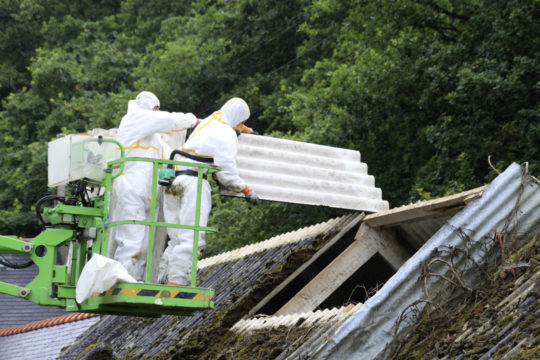
Work on old fiber-cement roofs presents risks due to the presence of asbestos. Asbestos removal is therefore an important activity for roofers, with specific regulations that must be followed.
The fight against asbestos
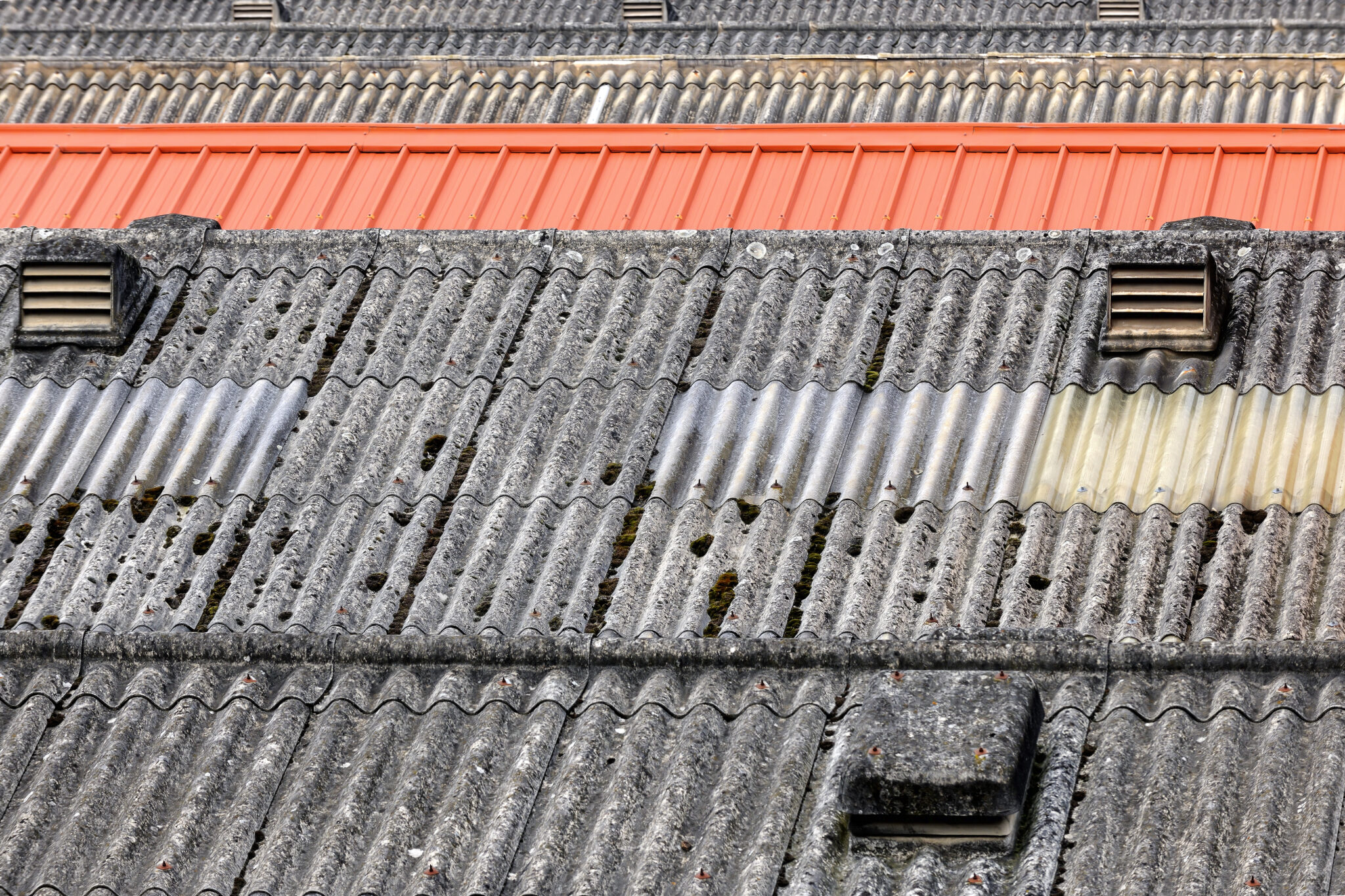
Since 1996, asbestos has been banned in buildings because it is recognized as particularly dangerous to health; almost all fiber-cement roofs made before that date still contain asbestos.
An "asbestos" diagnosis is mandatory in France when selling a property and depending on their condition, roofs are considered dangerous and sometimes even have to be removed: there is therefore a real market for asbestos removal and mastery of this subject is often essential in renovation work.
The asbestos removal procedure
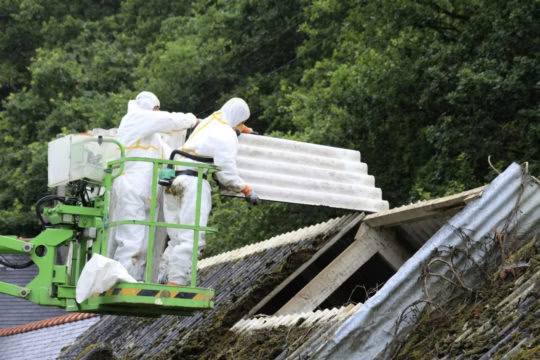
Interventions on asbestos-containing roofing are subject to a specific procedure in order to protect the roofer.
There are two possible solutions:
The first solution involves containment, which consists of covering the roof with a solution that encapsulates the asbestos, possibly adding roofing panels.
The second solution, more complex and expensive, involves completely removing and replacing the roof.
For any asbestos removal project, a safety zone must be established. Workers must wear a certified P3 protective mask, as well as safety glasses and gloves.
Dimos products for asbestos removal
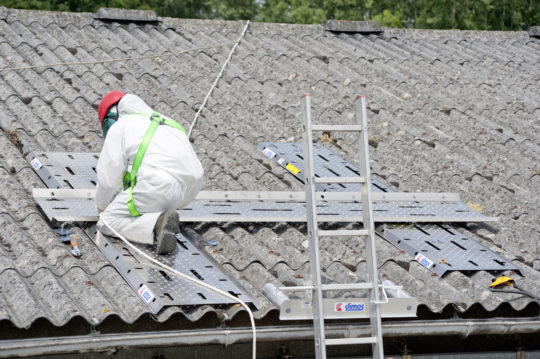
Fiber cement roofs become very fragile with age and can break during interventions, particularly on agricultural buildings.
In partnership with the MSA, Social Security for Farmers, Dimos has developed Sécuriplac, a solution for working on fragile roofs safely: these are kits of 3 aluminum plates, 3m long, designed to fit onto the corrugations of fiber-cement sheets, and thus distribute the weight over 3 plates, and thus avoid passing through the roof.
Our latest articles